
Products
Solutions
Technical Information
Motor Sizing
Downloads
Contact Us
Case Studies > Screw Tightening Machine Case Study of Prevention of Screw Galling and Crushing of Screw Heads
Screw Tightening Machine Case Study of Prevention of Screw Galling and Crushing of Screw Heads
Issue: Prevention of Screw Galling
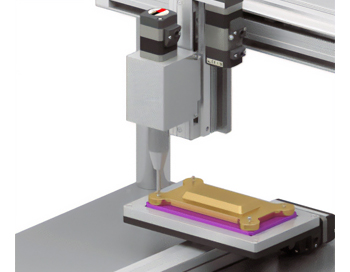
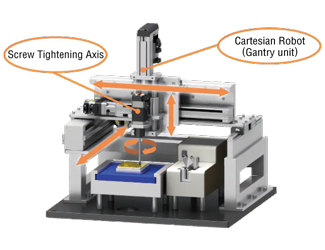
This a screw tightening equipment consisting of a cartesian robot (gantry unit) and a screw tightening axis.
The cartesian robot (gantry unit) moves to match the position of the 4 screws, and the AZ Series motor tightens them.
This equipment has made it possible to automate screw tightening, which used to be done manually, and has contributed to making the equipment size more compact, reducing the burden on workers, and leveling out work hours.
Challenge:
- Too much torque from the motor causes part of the screw threads to break or bite the screw head
- It is necessary to manually check that the screws are tightened, which is inefficient
Solution: αSTEP AZ Series “Push-Motion Operation" Function Ensures Proper Torque Tightening
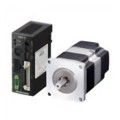
By using the αSTEP AZ Series, it is possible to tighten the motor with adjustable torque to prevent galling. In addition, the status of the motor can be checked by importing the feedback of the travel amount to the upper PLC.
Specific Application Examples
By using an electric actuator with a stroke that matches the load, screw tightening can be automated in a minimum amount of space. The XYZ configuration example enables a production line that does not stop the flow.
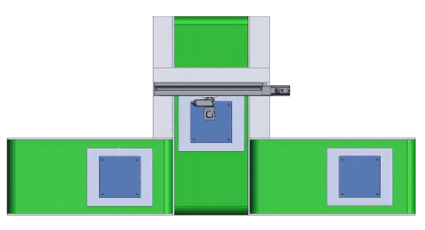
XZ Configuration
Features of gate-type with moving table
[top view]
Required Installation Area: |
Wider than cartesian robots (gantry units) |
|---|---|
Flow of line: |
2 Processes Occur (① Conveyor → Table, ② Table → Conveyor) |
Application Example
This example shows the screw tightening axis being controlled in the X and Z direction while another linear actuator moves the load in the Y direction.
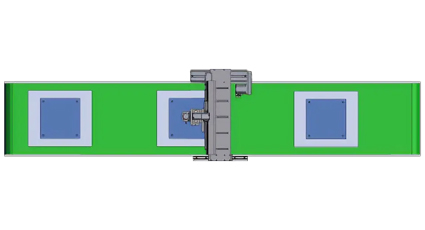
XYZ Configuration
Required Installation Area: |
Narrower than gate-type Using an electric actuator with a stroke appropriate for the load enables space saving in the installation area |
|---|---|
Flow of line: |
Does not stop |
Application Example
This example shows the screw tightening axis being controlled in the X, Y, and Z direction, and the load is stationery.
High Rigidity Design Reduces Product Defects (Screw Galling and Position Errors)
If the rigidity of the mechanism is low, it may not be able to withstand the reactive force of screw tightening and the entire mechanism may deflect. Deflection of the entire mechanism can cause defects such as galling or screw position errors.
The high rigidity EZS Series suppresses equipment deflection and contributes to the reduction of product defects.
For EZS6
Even when the overhang length is 1 m, a pressing force of up to 340 N is permissible.
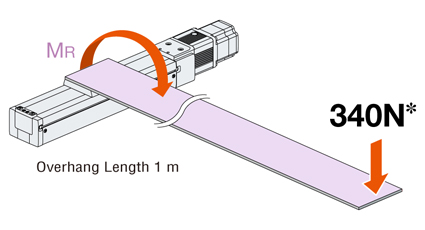
Pushing force and load values are calculated from the static permissible moment of EZS6, 340 N·m. (The weight of the board is not taken into account.)
Permissible Moment Values
Model |
Static Permissible Moment |
Dynamic Permissible Moment |
|---|---|---|
EZSM3 |
52.0 N·m |
10.5 N·m |
EZSM4 |
176 N·m |
27.8 N·m |
EZSM6 |
340 N·m |
55.6 N·m |
Reversed Motor Type Reduces Machine Footprint
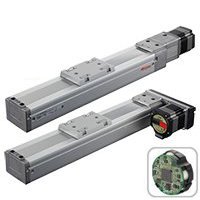
The use of a reversed motor type linear slide with a short overall length has achieved a compact design of the equipment. This allowed the linear slide to fit within the equipment width limitations of the line.
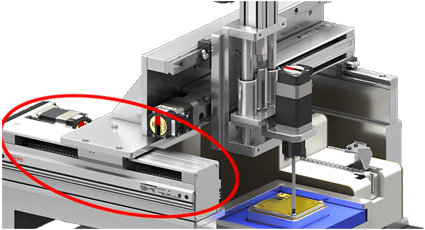
View of Cartesian Robot (Gantry Unit) from X-axis side
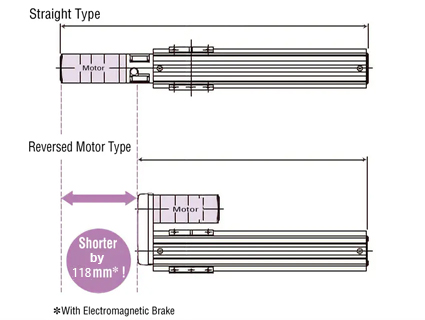
EZS4 electromagnetic brake type with 200 mm stroke
A Wide Variety of Strokes for Flexible Combinations
The EZS Series is available in a range of strokes from 50 mm~850 mm in 50 mm increments. X and Y axes can be combined as appropriate for the size of the load.
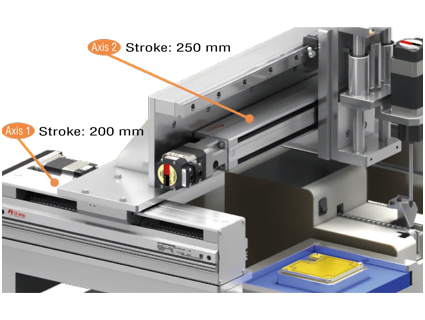
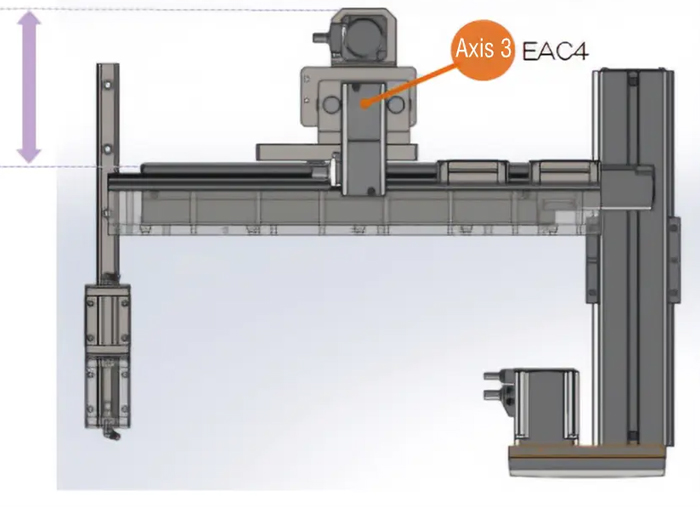
Linear Cylinders Reduce Overhang of Z-Axis
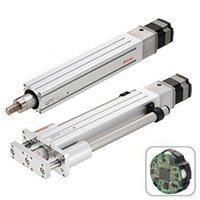
The electric cylinder has a thinner structure than the electric linear slide, which can reduce the overhang. In addition, use of a reversed motor type with a short overall length has achieved a compact design of the equipment.
"Push-Motion Operation" Function Limits the Tightening Torque
The torque to be tightened can be limited by setting the push current. During push-motion operation, tightening can be continued without triggering an overload alarm.
When the set torque is reached, the TLC output turns ON.
Do not use push-motion operation with the AZ Series geared type. Doing so may cause gear damage.
 |
 |
 |
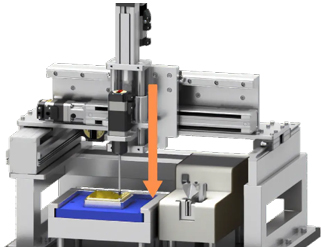
Press With Appropriate Force When Tightening Screws
The push-motion operation function, which allows for setting of the torque limiting value, pushes the screw with the appropriate force. The push force can be limited by setting the push current.
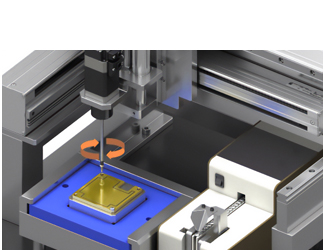
Limits the Generated Torque to Prevent Galling and Over-Tightening of Screws
The push-motion operation function, which allows for setting of the torque limiting value, prevents damage due to over-tightening.
Confirming the status of screw tightening via feedback of the travel amount and TLC output
The built-in rotor position detection sensor enables feedback of the travel amount to the host PLC. By capturing the travel amount and TLC output information, the status of tightening can be checked.
Unified Control of Screw Tightener and Linear Slides
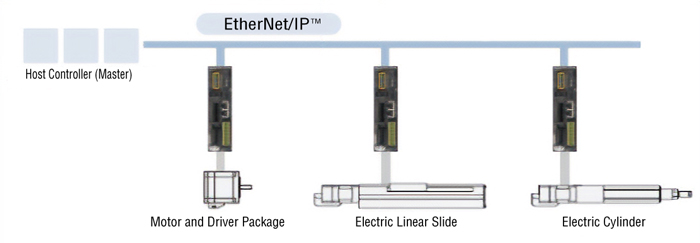
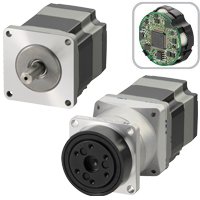
By using the EZS Series equipped with the AZ Series together, you can unify the control of the entire equipment. The EZS Series uses the AZ Series αSTEP hybrid step-servo motors and drivers to ensure highly accurate and stable synchronous operation with a built-in battery-free absolute encoder.
Other advantages include reduced design requirements and start-up labor due to unified wiring and software, and reduced inventory due to unified maintenance parts.
Engineering Notes
We're Here to Help

Business Hours:
Monday to Friday
8:30am EST to 5:00pm PST
Sales & Customer Service:
1-800-418-7903
Technical Support:
1-800-468-3982


